
Updated April 28, 2026 · Originally published April 28, 2026
Updated May 4, 2026 · Originally published April 28, 2026
🔑 Key Takeaways
- Different methods measure different things: Labs use HPLC; tCheck uses optical absorbance. Both are valid — they just answer slightly different questions about the same sample.
- THCA vs. THC accounting differs: Labs typically report total cannabinoids (THC + THCA × 0.877). tCheck reads activated THC. If your sample wasn't fully decarbed, the numbers will diverge.
- Sample prep is the biggest variable: How you homogenize, filter, and prepare the sample matters more than the device. Two readings of the same batch can differ if prep is inconsistent.
- Time changes the sample: Cannabis ages. THC oxidizes into CBN. A reading from 6 months ago and a reading today are measuring different molecular profiles, not different "right" answers.
- When a lab is the right answer: For commercial product certification, regulatory compliance, or expert disputes — use a certified lab. For home dosing decisions and recipe consistency, the tCheck home potency tester is built for that job.
The Question We Hear All the Time
Someone gets their tCheck result, then compares it to a lab test or a dispensary label, and the numbers don't match perfectly. The natural reaction is to wonder which one to trust.
It's a fair question, and it deserves a straight answer. The honest truth is that home and lab results can differ for several real, well-understood reasons. Understanding those reasons doesn't undermine confidence in home testing. It actually builds it, because once you know why the numbers can diverge, you also know how to minimize that gap and what the difference actually means for your dosing.
Let's go through the four most common reasons.
Reason 1: THCA vs. THC -- They're Measuring Different Things
 This is the single biggest source of confusion, and it trips up even experienced cannabis users.
Commercial labs typically report both THC and THCA separately, then calculate a "total THC" number using a conversion formula. That formula accounts for the fact that THCA converts to THC when heated -- so a lab report might say a flower sample is "22% total THC" even though most of that is technically still THCA at the time of testing.
tCheck measures active THC (OR active CBD) -- the cannabinoids that are actually present in your sample in their activated form. If you're testing a fully decarboxylated infusion, this is exactly what you want to know. But if you're testing something that hasn't been fully decarbed, tCheck will read lower than a lab's "total THC" figure -- not because it's wrong, but because the THCA hasn't converted yet.
The fix: make sure your decarboxylation is complete before testing. Understanding decarboxylation and why it matters for testing is the foundation of getting consistent, accurate results at home.
Reason 2: Sample Preparation

A lab test is performed by trained technicians on carefully prepared, precisely weighed samples using controlled equipment. Every variable is accounted for.
At home, the biggest variable is homogenization -- whether your infused oil or tincture is thoroughly and evenly mixed before you pull a sample. Cannabinoids don't distribute perfectly evenly in oil. If you test from the top of a jar that hasn't been stirred, you might get a different reading than if you test from the bottom. Neither reading is "wrong". They're just measuring different parts of an imperfectly mixed batch.
The fix: stir or shake your infusion vigorously and thoroughly immediately before pulling your test sample. This one habit closes a large part of the gap between home and lab results.
Reason 3: The Sample Itself May Have Changed
A lab test and a home test are almost never performed on the exact same sample at the exact same moment. Time, temperature, light exposure, and oxidation all affect cannabinoid concentration. An infusion that sits in a warm kitchen for a few days before testing will read slightly differently than the same infusion tested fresh. A dispensary product tested at the production facility was tested weeks or months before you bought it.
This isn't a flaw in either testing method, it's just physics and chemistry. Cannabinoids degrade over time, and a reading taken at different points in a product's life will reflect that.
The fix: test your infusions fresh, close to the time you make them, and store them properly between uses. This is one of the genuine advantages of home testing. You can measure what's actually in your batch right now, not what was in a representative sample six weeks ago.
Reason 4: The Instruments Themselves Use Different Methods
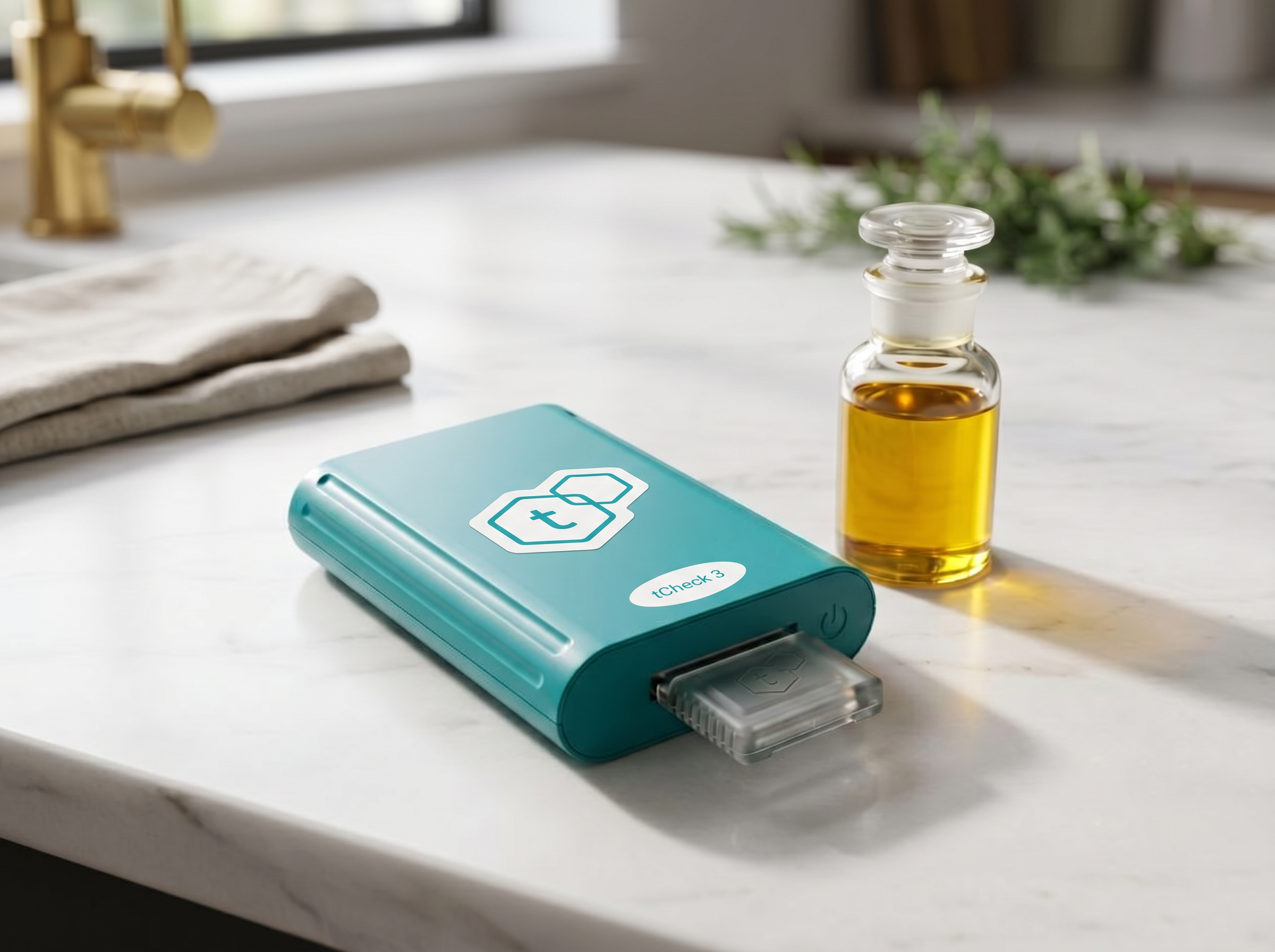
 Commercial labs use HPLC (high-performance liquid chromatography), which physically separates individual cannabinoids and measures each one independently. tCheck uses UV absorbance spectrophotometry, which measures total cannabinoid concentration based on how much UV light is absorbed by the sample.
Both methods are grounded in solid science. But they're measuring slightly different things, and they have different sensitivity profiles. HPLC can distinguish between, say, THC and CBN in the same sample. UV absorbance measures the combined signal of all UV-absorbing compounds. In a well-prepared, fully decarbed infusion where THC or CBD is the dominant cannabinoid, the two methods track closely. In a complex, multi-cannabinoid sample, they can diverge more.
This is also why how tCheck measures THC potency matters to understand -- knowing what the device is actually measuring helps you interpret your results correctly, rather than comparing them against a different measurement on an apples-to-oranges basis.
So Which Number Should You Trust?
That depends on what you're trying to do.
If you need regulatory certification -- submitting a product for commercial sale, meeting state compliance standards, or verifying a specific cannabinoid profile for medical use, a licensed lab is the right answer. HPLC at a certified lab is the industry standard for a reason, and no home device replaces it for those purposes.
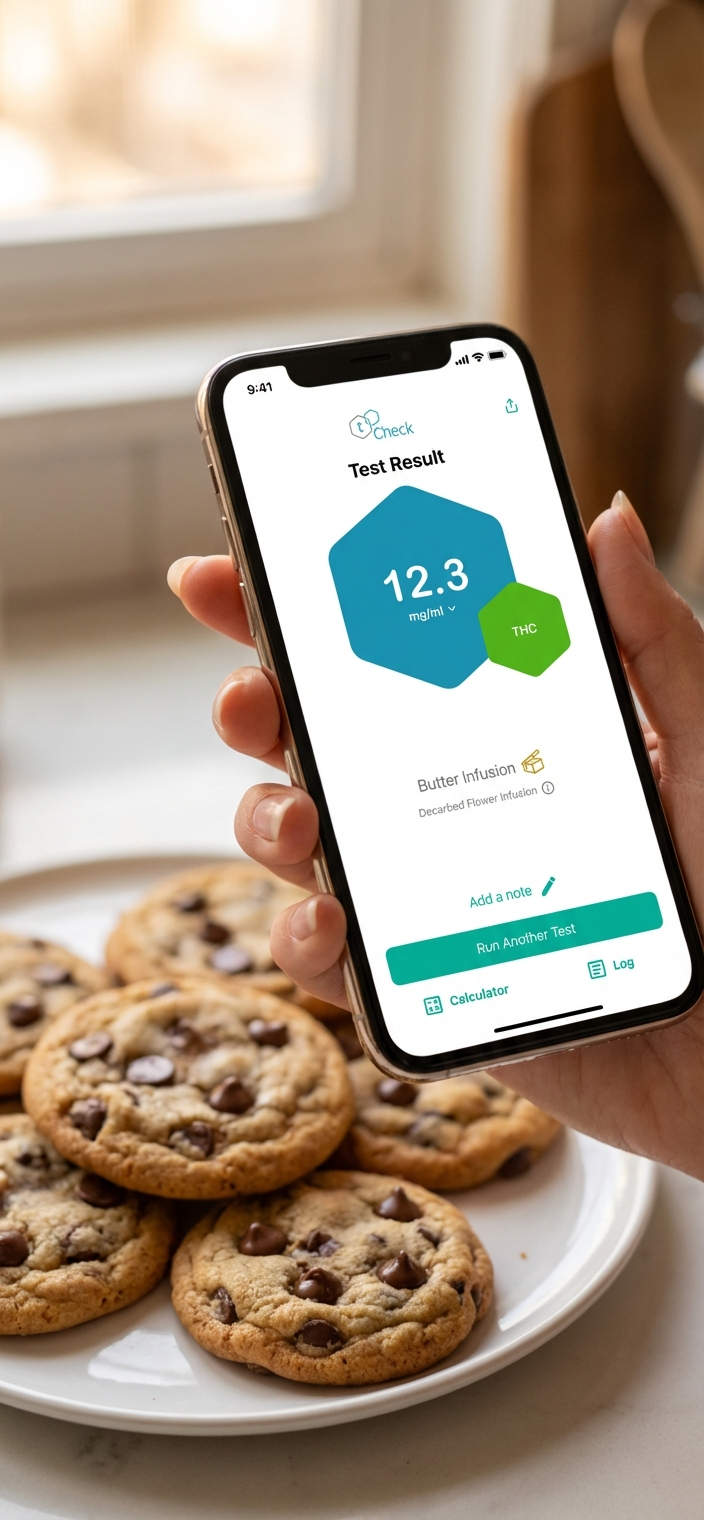
If you're a home infuser trying to make consistent, well-dosed edibles. Knowing how many milligrams of THC are in your cannabutter, your tincture, your infused oil, before you dose a single serving, then a lab test is overkill and tCheck is exactly the right tool. You don't need a certified cannabinoid profile. You need to know whether your batch is 5 mg/mL or 15 mg/mL so you can dose accordingly. tCheck tells you that, at home, in five minutes, batch after batch.
The goal isn't perfect agreement between every instrument. The goal is making better decisions than you would by guessing. On that measure, home testing wins decisively over relying on a recipe, a calculator, or a dispensary label that was accurate for a different batch months ago.
How to Get the Most Accurate Home Results
If you want your tCheck readings to track as closely as possible to lab results, here's the short version:
- Decarb fully. Incomplete decarboxylation is the most common reason home results run lower than expected. Give your decarb the full time and temperature it needs.
- Homogenize thoroughly. Stir or shake your infusion completely before sampling. Don't test from the top of an unmixed jar.
- Test fresh. Test as close to the time of making as practical. Cannabinoid degradation is real, even if it's slow.
- Use clean equipment. A worn or contaminated syringe introduces residue that affects your reading. Replace your syringe and filter set regularly.
Follow those four steps and your home results will be consistent, reliable, and meaningful which is exactly what you need to dose with confidence.
The Bottom Line
Home and lab results can differ, and the reasons are real and understandable. They're not random. They're not a sign that one method is broken. They reflect the fact that different instruments measure slightly different things, at different points in time, from samples that may have been prepared differently.
For home infusers, the relevant question isn't "does tCheck match the lab perfectly?" It's "does tCheck tell me what I actually need to know to dose my batch safely and consistently?" The answer to that is yes and it does it in five minutes, in your kitchen, every time you make a new batch.
The tCheck — accurate at-home cannabis testing device is the best at-home tool for exactly this use case. If you want to understand more about the best THC potency tester for home use and why it fits the home infuser's workflow, that's a good next read.
❓ Frequently Asked Questions
Why does my home tCheck reading disagree with the COA on my flower?
Several reasons can stack: the COA may report THCA + THC as a total while tCheck reads activated THC; sample prep differs between you and the lab; and flower naturally varies bud-to-bud, so you may have tested a different sample than the lab did.
Which is more accurate, my tCheck or a lab?
It depends on what you're trying to measure. For total cannabinoid potential of raw flower, a lab is more accurate. For activated THC in your finished infusion, tCheck is direct and accurate enough for dosing decisions. Neither is universally "more accurate" — they answer different questions.
Do I need to recalibrate my tCheck if results seem off?
Usually no. The optical sensor is stable. Inconsistent readings almost always trace back to sample preparation: homogenization, filtering, dilution, or incomplete decarb. Try running a known sample (a small known-potency oil) before assuming your device drifted.
Should I send my edibles to a lab to confirm tCheck readings?
Not for personal use — the cost (often $75-150 per sample) makes it impractical. For commercial product or anything you're selling, yes — get an independent COA before each batch goes to market.
Get Consistent Readings, Without the Lab
For home dosing decisions and recipe consistency, the tCheck device delivers — without the lab cost or wait time.
Try the tCheck Potency Tester →
Written by
Peichen Chang
Founder & CEO, tCheck
Peichen spent most of his career designing ASICs (computer chips) for enterprise data storage. One day, a friend asked for help dosing her homemade edibles to control Parkinson’s symptoms, and tCheck was born. When he is not communing with AIs, he is cooking, traveling, or hiking.