Updated September 24, 2026 · Originally published September 22, 2021
Often, accurately dosing edibles is akin to a balancing act. If there aren't enough cannabinoids per serving, you won't get the relief that you need. However, too much THC in your edibles will make it difficult to function throughout the day. The only way you could avoid these issues is by taking accurate cannabinoid measurements and conversions.
🔑 THC Dosage Calculator Guide: Key Takeaways
- Why it matters: Accurate dosing prevents unwanted over-dosing or under-dosing experiences when making edibles
- What you need: Your infusion potency in mg/mL, total oil volume in the recipe, and number of servings
- Test for precision: Get your infusion potency reading first with the tCheck home potency tester, then calculate
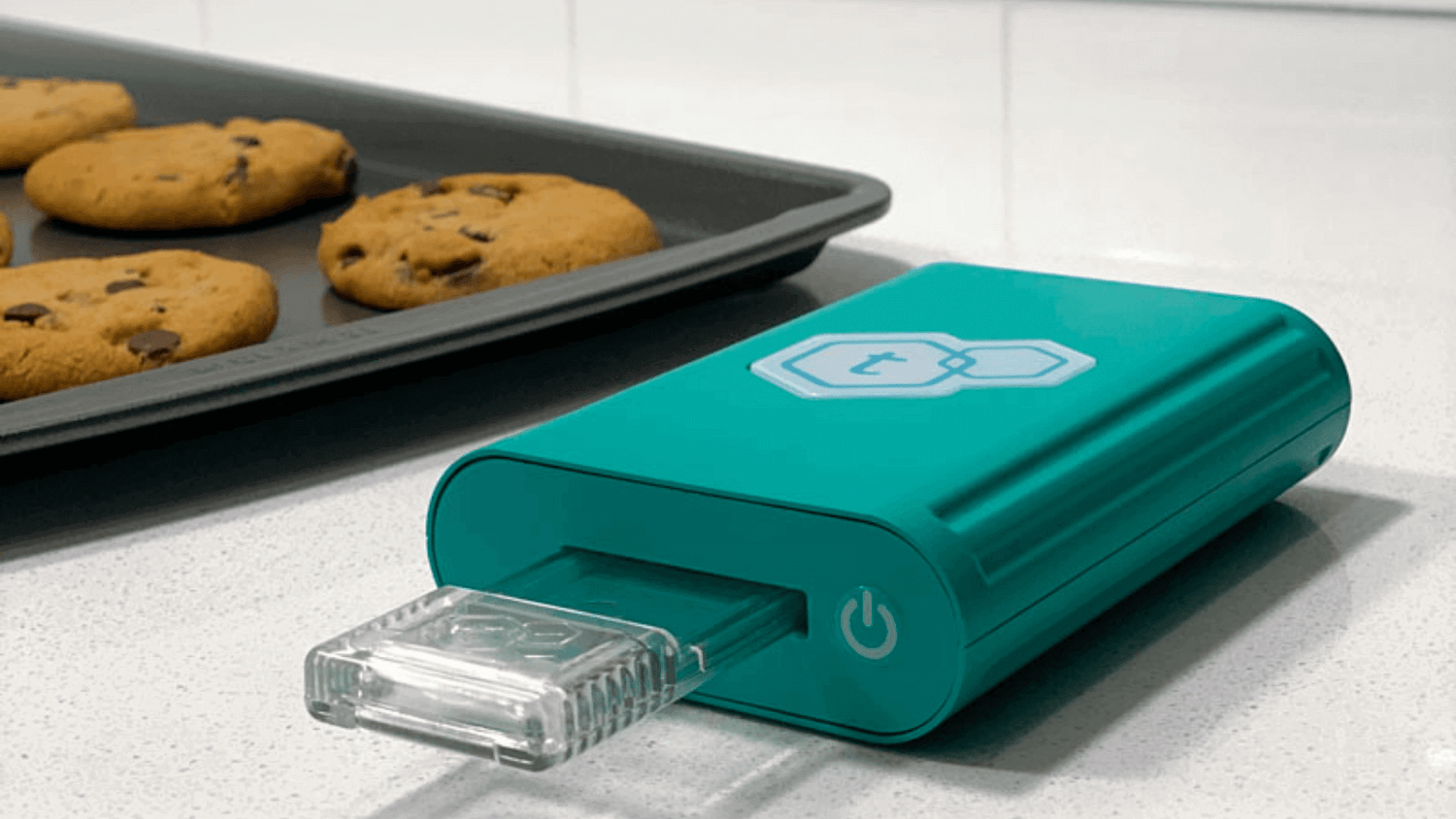
Thankfully, you no longer need to send your edibles to an expensive lab for a thorough cannabinoid analysis or play roulette with your day. Tools like the tCheck home potency analyzer and the built-in tCheck dosage calculator enables you to dial in your recipe to get the exact dose and strength that you want.
Don't have the app? download the tCheck app!
📱 How Do You Use the tCheck Calculator?
The calculator is built into the tCheck app. After you measure your infusion with the tCheck device, you enter four things:
- Your infusion’s strength — the mg/mL reading tCheck gave you.
- The total oil in your recipe — for example, 2 cups for a pan of brownies.
- The number of servings the recipe makes.
- The dose you want in each serving, in milligrams. 5 mg is a common starting point.
Tap Calculate and the app tells you how much of your infused oil to use and how much regular oil makes up the rest, so every serving lands on your target. The app lets you choose the unit for your oil — milliliters, teaspoons, tablespoons, cups or ounces. A worked example with screenshots appears further down this page.
🧮 The Manual Potency Calculation Formula
Before using any calculator, understanding the underlying math helps you trust your results and catch errors. The standard formula for estimating THC per serving from an infused batch is:
(Grams of cannabis × THC% × 1,000 × Extraction efficiency) ÷ Number of servings = mg THC per serving
For example: If you use 7 grams of cannabis at 18% THC with a 70% extraction efficiency to make 24 brownies:
(7 × 0.18 × 1,000 × 0.70) ÷ 24 = 36.75 mg per brownie
The catch: “extraction efficiency” varies widely — from 40% to 90% depending on your method, temperature, fat content, and infusion time. This is why the formula is only an estimate. The only way to know your actual potency is to measure your infused oil or butter directly with a potency tester before baking.
🔬 Why Calculators Alone Aren’t Enough
Online THC dosage calculators give you a mathematical starting point, but they all share the same fundamental limitation: they rely on your estimated extraction efficiency, which is impossible to know without testing. The difference between a 50% and 80% extraction on the same batch of cannabis can mean a 10mg vs. 16mg brownie — a significant difference for anyone managing their cannabis experience carefully.
The tCheck approach combines the best of both worlds: use the tCheck cannabinoid analyzer to get your actual mg/mL reading from your infused oil or butter, then plug that real number into any dosage calculator. This eliminates the guesswork entirely and gives you reliable, repeatable results batch after batch.
When making edibles at home, you'll usually start with an infused oil. Depending on the strength of your starting material (buds, trim, etc.), the oil's intensity can vary widely. However, once you know the potency of your infused oil, you can dial in the dose that you need using the tCheck calculator app.
For instance, say you're making a batch of brownies and the recipe calls for 2 cups of oil. Your goal is for each brownie to have 5 mg of cannabinoids each. When you used the tCheck tester to measure your oil, it gave the result of 8.5 mg/mL. This means that in every mL, you have 8.5mg of THC or CBD. BTW, on the results screen, you can automatically see the same number in terms of mg in teaspoons, tablespoons or other units.
You can now plug this result into the tCheck app calculator function as shown below:
After tapping <Calculate>, the app will tell you how much infused oil and regular uninfused oil to use.


In the case above, you might need to do a bit of converting to make the units more usable (we are working on fixing this!). To make your life easier, here's a handy conversion table to keep nearby:

📞 Still Have Calculation Queries?

At tCheck, we strive to make our products and services as user-friendly as possible. However, we understand that weed calculations can be confusing, especially if you're new to making cannabis edibles. If you're having any issues using the tCheck calculator function, we always encourage you to visit our official Support page. You could also learn more about accurately dosing flower-to-oil ratios.
Download the tCheck app today and get testing!

What This Means For You
Using a THC dosage calculator takes the guesswork out of making cannabis edibles and helps ensure a consistent, safe experience. By knowing the potency of your infused oil and entering accurate values, you can easily control the strength of each serving.
Tools like dosage calculators not only improve precision but also boost confidence in your recipes. Whether you’re a beginner or experienced user, accurate dosing is key—so always measure carefully and consume responsibly.
Frequently Asked Questions
What is a THC dosage calculator?
A THC dosage calculator helps you determine how much infused oil to use in a recipe to hit a specific mg of THC per serving, based on your infusion’s known potency.
How do I use a THC dosage calculator?
Input your infusion potency in mg/mL (from tCheck), the total volume of oil your recipe calls for, and your desired mg per serving. The calculator outputs how much infused oil to use.
Why do I need a calculator for cannabis edibles?
Dosing involves multiple variables — potency, volume, and servings — and small errors create very different experiences. A calculator ensures consistent, safe results every time you bake.
What information do I need to calculate my edible dose?
You need three things: your infusion’s potency in mg/mL (test with tCheck), the total volume of oil the recipe uses, and the number of servings you plan to make.
What is a safe starting dose for cannabis edibles?
Beginners should start with 5mg of THC per serving. Experienced users typically use 10–25mg. Always wait at least 90 minutes after eating before deciding whether to take more.
Know Your Potency Before You Dose
The tCheck Potency Tester gives you lab-accurate THC and CBD readings from your infusions in about 2 minutes — no guesswork, no wasted batches.
Get the tCheck Potency Tester →
Written by
Peichen Chang
Founder & CEO, tCheck
Peichen spent most of his career designing ASICs (computer chips) for enterprise data storage. One day, a friend asked for help dosing her homemade edibles to control Parkinson’s symptoms, and tCheck was born. When he is not communing with AIs, he is cooking, traveling, or hiking.