Updated April 22, 2026 · Originally published September 2020
What could be more satisfying than taking a bite of your own cannabis-infused edible? Unfortunately, anyone who has ever made homemade edibles knows how complicated measuring correct dosages can be. That sense of relaxation you were expecting can quickly turn into stress when you find out you've made your culinary masterpiece too strong.
Whether you're estimating with a cannabutter calculator or testing with a device, knowing your edible potency before you eat is the difference between a great experience and a regrettable one. Let's break down every factor that affects strength—and the tools that actually work.
How to Measure Edible Potency
Also in this guide
Calculators estimate. tCheck measures. Know your exact mg/serving before you eat.
Test with tCheck →What Factors Affect the Potency of Cannabis Edibles?
There are a host of factors that can affect the potency of your edibles. Modifying any one aspect can drastically change the strength of your infusions.
Cannabinoid Content in the Raw Material
If you're using a lab-tested cannabis product, you'll be able to get an accurate percentage of THC or CBD from the label or the product's Certificate of Analysis. Not everyone has access to lab-tested cannabis, so here's an estimate of the cannabinoid content in each type of raw material:

| Raw Material | Typical THC/CBD Range | Notes |
|---|---|---|
| Hemp or Cannabis Flower | 10–30% | Varies widely by strain; check Leafly for averages |
| Shake | 8–25% | Slightly lower than buds; bottom-of-container leftovers |
| Kief | ~70% | Pure trichomes, very concentrated |
| Hash | 40–80% | Depends on strain and manufacturing process |
| Dabs (Wax, Shatter, Butter) | 70–90% | Most concentrated form short of isolate |
| CBD/THC Isolate | ~98% | Nearly pure single cannabinoid |
Remember: You will need to decarboxylate your raw material before you start your infusion to release the full potency of your cannabis. Without decarbing, THCA and CBDA stay in their inactive acid forms.

What Carrier Oils Are Best for Extracting Cannabinoids?
Some oils and fats are better than others at pulling the cannabinoids out of raw material. A study published in High Times examined the efficiency of different carrier oils, and the results make one thing clear: fat type matters.
| Carrier Oil/Fat | Fat Type | Extraction Efficiency | Best For |
|---|---|---|---|
| Butter / Ghee | Saturated | Highest | Baked goods, cooking |
| Coconut Oil | Saturated | Highest | Gummies, capsules, topicals |
| Bacon Fat / Lard | Saturated | Highest | Savory dishes |
| Extra Virgin Olive Oil | Monounsaturated | 20–25% lower | Dressings, dips, Mediterranean |
| Avocado Oil | Monounsaturated | 20–25% lower | High-heat cooking |
| MCT Oil | Medium-chain saturated | High | Tinctures, sublingual drops |
| Grain Alcohol (190-proof) | Solvent | Very High | Tinctures |
| Vegetable Glycerin | Humectant | Low | Vape liquids, topicals |
Key takeaway: Saturated fats like butter and coconut oil extract the most cannabinoids. For tinctures, 190-proof food-grade grain alcohol is the gold standard. Vegetable glycerin is the least efficient option.
Other Factors That Affect Edible Potency
While understanding your raw material's potency can help you approximate the correct dosage, several other variables come into play:
- Decarb quality: Did you decarb your cannabis at the right temperature for the right time? Under-decarbing leaves THCA unconverted; over-decarbing degrades THC into CBN.
- Infusion time: How long did you infuse your carrier? Longer isn't always better—most cannabinoids extract within 2–4 hours.
- Straining method: How well did you strain your mixture? Fine cheesecloth captures more plant material than a coarse strainer.
- Storage conditions: Heat, light, and air degrade cannabinoids over time. Store infusions in dark glass containers in a cool place.
These variables can increase or decrease the potency of your edibles in unexpected ways. The only way to know precisely how much CBD or THC is in your infusion is through testing—either a lab or an at-home potency tester like tCheck.
Cannabutter Potency Calculator: How to Estimate mg per Serving
If you don't have a testing device, you can use a simple cannabutter calculator formula to estimate your edible potency. This math works for any infusion—butter, coconut oil, olive oil, or tincture.
The Edible Potency Formula
÷ Number of servings = mg THC per serving
Extraction efficiency accounts for cannabinoid loss during decarbing and infusing. A reasonable estimate is 0.70–0.85 (70–85%) for a well-executed infusion using saturated fat. If you're using a less efficient carrier like olive oil, drop this to 0.55–0.65.
Worked Examples
7 grams of 20% THC flower × 0.20 × 1,000 × 0.80 efficiency = 1,120 mg total THC in your butter.
Divide into 24 cookies = ~46.7 mg per cookie. That's too strong for beginners!
For 5 mg cookies, use only 1.5 grams of flower, or use less infused butter per batch.
3.5 grams of 18% THC flower × 0.18 × 1,000 × 0.80 = 504 mg total.
Cut into 12 brownies = 42 mg per brownie. Still strong—consider using half the infused butter and half regular butter for ~21 mg each, or cut into 24 smaller pieces for ~21 mg.
7 grams of 22% THC flower × 0.22 × 1,000 × 0.85 = 1,309 mg total.
Fill 52 capsules = ~25 mg per capsule. Coconut oil's high extraction rate makes it ideal for precise capsule dosing.
Why Calculator Estimates Fall Short
The formula above gives you a ballpark—but several hidden variables mean your actual potency could be 20–40% different from the math:
| Variable | Calculator Estimate | tCheck Measurement |
|---|---|---|
| Accuracy | ±20–40% | ±15% (lab-grade precision) |
| Accounts for decarb quality | No—assumes fixed efficiency | Yes—measures actual activated THC |
| Accounts for strain variation | No—uses label THC% | Yes—tests what's actually in your oil |
| Time per test | ~5 min (math + measuring) | <60 seconds |
| Cost per test | Free | ~$2 per test (reusable device) |
| Requires lab-tested starting material | Yes—can't calculate without THC% | No—tests the final infusion directly |
Bottom line: A cannabutter calculator is a useful starting point, especially if you have lab-tested flower. But if you're using homegrown cannabis, street-market flower, or any material without a Certificate of Analysis, the formula is just a guess. Testing your finished infusion with tCheck removes the guesswork entirely.
How Do You Dose Cannabis Edibles?
As you can see, dosing edibles can become quite complicated even if you do have access to lab-tested cannabis. Here are the three main approaches, from least to most accurate:
Online Calculators
Online edibles calculators can help simplify the process of figuring out the potency of your infusions. However, online calculators are not 100% accurate and can only give you a general idea of the cannabinoid content in your edibles. They rely on the same formula above—and share all of its limitations. If you want a precise measurement, you'll need to test your infusion directly.
At-Home Testing with tCheck

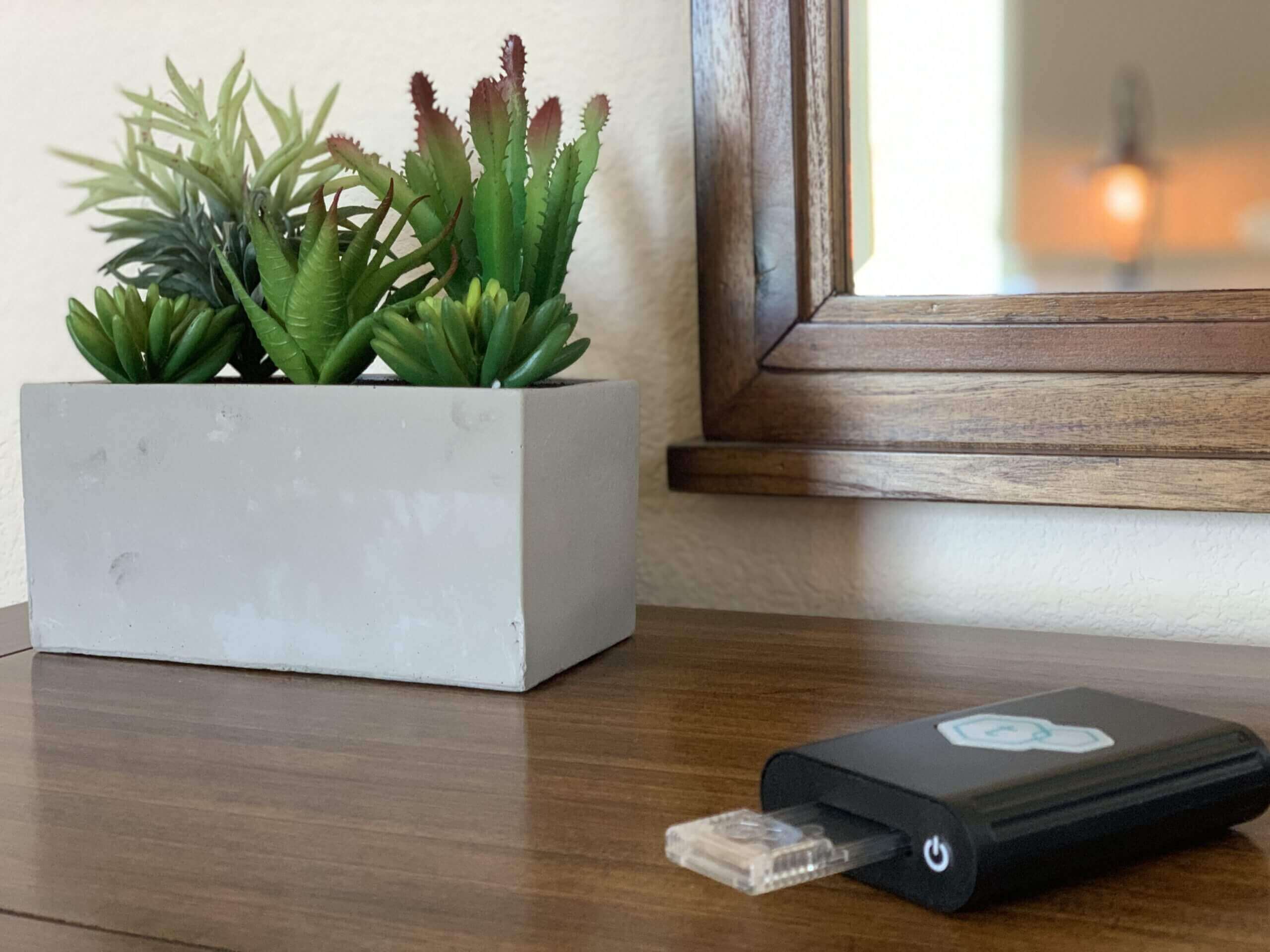
tCheck's THC and CBD potency analyzer is almost like having a lab-testing facility right in your own kitchen. You simply place a small sample of your infusion on the tray, insert it into the device, and in under 60 seconds you have a precise mg/mL reading.
The device also features a built-in dosing calculator: tell it you want each edible to contain 10 milligrams, and tCheck will tell you exactly how many teaspoons, tablespoons, or milliliters to add per portion. No math required.
tCheck also offers an Expansion Kit to measure raw materials like buds, shake, or kief—so you can check your starting material before you infuse.
Lab Testing
Sending a sample to a licensed testing laboratory gives you the most precise results, but it's impractical for home cooks. Typical costs run $50–150 per sample with a 3–7 day turnaround. For commercial producers, lab testing is essential. For home infusion makers, tCheck bridges the gap between guessing and lab-grade results at a fraction of the cost.
Frequently Asked Questions
How do I calculate cannabutter potency?
Use the formula: (grams of cannabis × THC% × 1,000 × extraction efficiency) ÷ number of servings = mg THC per serving. Assume 70–85% extraction efficiency for butter. For a more accurate result, test your finished butter with tCheck instead of relying on math alone.
How many mg of THC are in a tablespoon of cannabutter?
It depends entirely on how much cannabis you used and its THC percentage. For example, infusing 7 grams of 20% THC flower into 1 cup of butter (16 tablespoons) at 80% efficiency yields about 70 mg per tablespoon. The only way to know your specific batch is to test it.
How accurate are online edible potency calculators?
Online calculators can be off by 20–40% because they can't account for your actual decarb quality, extraction efficiency, or strain variation. They're useful for rough estimates but shouldn't be relied on for precise dosing, especially for new users.
What's the best carrier oil for cannabis edibles?
Saturated fats like butter, coconut oil, and ghee are the most efficient at extracting cannabinoids. Olive oil works but is 20–25% less efficient. For tinctures, 190-proof grain alcohol is the top choice.
Can I test edible potency without a lab?
Yes. tCheck is an at-home potency tester that gives you a precise mg/mL reading in under 60 seconds. It tests the infusion directly, so you don't need to know the THC% of your starting material.
Final Thoughts
Measuring the potency of your cannabis edibles doesn't have to be confusing or stressful. Start with the cannabutter calculator formula for a rough estimate, understand how your carrier oil and decarb quality affect the final product, and—when accuracy matters—test your infusion with a device purpose-built for the job.
Whether you're making your first batch of edibles or your fiftieth, consistent dosing is what separates a great experience from an unpredictable one. Explore the tCheck potency tester and take the guesswork out of every batch.